Smart Spending · Everyday Essentials
The Cost-Per-Use Test for Choosing an Everyday Bag
A bag’s price tag is immediate. Its value takes time to reveal itself. To compare options fairly, look beyond the checkout total and ask how often you’ll carry each one, how well it will hold up, and whether it makes your routine easier.
Published October 10, 2026
A bag purchase can begin with a small, familiar calculation: this one costs less; that one looks sturdier. Then come the less visible questions. Will it feel comfortable on a crowded commute? Is there room for the things you carry every day? Can it be cleaned without special treatment? And, most important, will you reach for it next week—or leave it in a closet after the novelty fades?
The cost-per-use test turns those questions into a practical comparison. Divide a bag’s purchase price by the number of times you expect to use it over a chosen period. The result is not a verdict on whether the bag is stylish, ethical, or worth owning. It is a way to see the price in relation to the job the bag actually does.
That distinction matters. The lowest-priced option is not automatically the best value, and a higher-priced bag does not become a bargain simply because it is made to last. The useful choice is the one whose price, durability, comfort, capacity, care requirements, and place in your routine add up for you.
A simple equation—and a more useful question
The basic formula is straightforward:
Cost per use = purchase price ÷ estimated number of uses
Imagine a lower-priced bag that you expect to take on 20 occasional outings. If it costs $40, its estimated cost is $2 per use. Now consider a more durable everyday option priced at $120 that you expect to carry 240 times during the next year. Its estimated cost is 50 cents per use.
Those figures do not prove that the second bag is the right choice. They show that frequent use can change how a price looks. The less expensive bag may be perfectly sensible for occasional errands, while the more expensive one may make more sense if it replaces a bag you would otherwise use almost daily. The scenario becomes useful when the estimates reflect your real habits rather than the version of yourself you imagine becoming after a purchase.
Before comparing numbers, define what counts as a use. A full workday with the bag, a grocery trip, and a short walk to a café could all count. You do not need an elaborate tracking system. A reasonable estimate—based on your calendar, commute, and routines—is usually enough to make the comparison clearer.
Choose a time period as well. A year is often easy to picture, but a shorter period may suit a seasonal bag, while several years may better represent a sturdy everyday carry. Be consistent: comparing one bag’s first-year estimate with another bag’s five-year estimate will make the result less meaningful.
Start with the life you actually lead
Frequency is the hinge of the cost-per-use calculation. A bag used every weekday has a different value profile from one taken to a handful of special occasions. Yet purchase decisions are often made around a single moment: a sale, a striking design, or the promise of a future routine. The more grounded question is not “How often could I use this?” but “When did I last need a bag like this, and how often is that likely to happen again?”
Think through the ordinary week. Do you carry a laptop, water bottle, lunch, or gym clothes? Do you walk, cycle, drive, or use public transit? Are you usually traveling light, or do you bring several essentials wherever you go? An everyday bag needs to work through the repeated, unremarkable parts of life—not only the one outing that made it seem indispensable.
It can help to name the role before you shop. A bag for a daily commute has different requirements from a compact bag for evenings or a roomy tote for errands. If the new purchase fills a gap, identify the gap. If it duplicates something already in your closet, ask whether the new one offers a meaningful improvement or simply a different look.
Use conservative estimates. A bag you expect to carry every day may, in practice, be set aside on weekends or during trips. A bag bought for “everything” may turn out to be too bulky for quick errands and too small for work. A realistic use estimate gives you a sturdier comparison than an optimistic one.
Durability is more than a strong-looking fabric
A bag that sees frequent use will face friction, weight, weather, and repeated handling. Its long-term performance depends on more than the main material. Look at how the straps connect to the body, whether the seams appear reinforced where they carry tension, how the base is constructed, and whether the closure suits the way you move through the day.
These details matter because wear often begins at stress points. A strap that is comfortable when empty can dig into a shoulder once the bag is loaded. A light fabric may be convenient but may not suit heavy daily contents. A zipper can help secure belongings, while an open top may make quick access easier. Neither arrangement is universally better; the right choice depends on what the bag carries and where you use it.
Materials also involve trade-offs. A soft, lightweight bag may be easy to fold or carry, but its shape may not provide much structure. A more substantial construction may feel reassuring and hold its form, yet become uncomfortable when packed heavily. Recycled materials can be part of a product’s appeal, but a material label alone cannot tell you how the whole bag performs. Construction, intended use, and care all matter.
Try to assess durability in relation to your expected routine rather than as an abstract promise. If you carry a few lightweight items, you may not need heavy-duty construction. If the bag will hold a laptop or groceries, the straps and seams become more important. A feature earns its place in the price comparison when it addresses a need you actually have.
Comfort and capacity are value, too
Capacity is not just a question of whether everything fits. A bag can hold a surprising amount and still be awkward to use. Consider whether the opening makes contents easy to reach, whether an inside pocket keeps smaller items from disappearing, and whether the shape works with the objects you carry most often.
Comfort can determine how many times a bag is used—and therefore affect its cost per use. Handle length, strap width, weight, and the way the bag rests against your body are practical considerations. If you are able to try it in person, test it with items similar to what you normally carry. An empty bag in a shop may feel very different when loaded with a laptop, a book, keys, and a water bottle.
Ease of access may be crucial on a commute; a secure closure may matter more on crowded transit; a lightweight design may suit errands on foot. These are not luxury extras if they remove a recurring inconvenience. At the same time, features that sound useful but go unused can inflate the price without adding much value to your life.
A well-chosen everyday bag is not necessarily the one with the most pockets or the largest capacity. It is the one that carries your regular essentials without making every trip feel like a compromise.
Care affects the real cost
The purchase price is only one part of ownership. Cleaning instructions, repairs, replacement parts, and the time required to maintain a bag can all affect whether it remains useful. Before buying, check what care the material requires. A bag that can be cleaned easily may be a more practical match for frequent errands than one that needs delicate handling.
Care needs should be weighed honestly. If a product requires a routine you are unlikely to follow, its theoretical lifespan may not match its real one. That does not make a higher-maintenance bag a poor choice; it simply means the maintenance belongs in the decision. Likewise, a washable component can be a practical advantage, but washing instructions should be followed rather than assumed.
When thinking about repairs, consider whether a strap, seam, or closure could be addressed if it failed. Do not assume every product is repairable or that a repair will be inexpensive. The point is to treat longevity as a combination of construction, care, and what you are realistically willing to maintain.
For a more complete comparison, you can add known expenses to the formula:
Estimated ownership cost per use = (purchase price + expected care or repair costs) ÷ estimated uses
Keep the estimate simple. If you do not know what repairs might cost, do not invent a precise figure. You can compare the options using the information available, then note that future costs are uncertain. A transparent rough calculation is more useful than a complicated one built on guesswork.
A product example: the role of design details
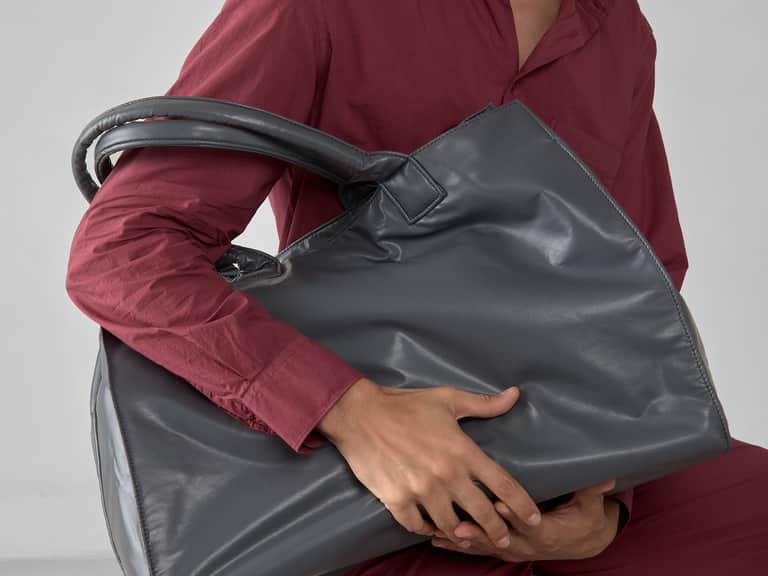
Consider the Puff Hang tote bag, a Society Limonta design made from recycled polyester, with polyester and nylon in its composition. It has two wide handles and an inside pocket, and is described as a soft, versatile tote for everyday carrying. Those details offer a starting point for a personal value comparison—not a conclusion about how long it will last or whether it suits every routine.
Someone deciding whether it belongs in their daily rotation might ask: Do the handles feel comfortable when the tote is carrying the usual load? Does the capacity fit the items they bring? Is the inside pocket useful for keeping small essentials accessible? Does a soft, flexible shape suit their commute, or would they prefer a more structured bag? How does the care guidance fit their expectations?
Then comes the numerical test. Estimate how often the tote would be used over a year and divide its current purchase price by that number. Repeat the same calculation for an alternative. The numbers become meaningful only alongside the differences that matter to the buyer: comfort, organization, materials, care, and likely lifespan. A product description can identify features; it cannot substitute for a fit assessment or guarantee how a bag will perform under individual conditions.
The comparison works best when it is fair
It is tempting to compare the cheapest available bag with the most expensive one and let the cost-per-use figures settle the argument. A better comparison starts with options that could plausibly do the same job. If one bag is meant for light, occasional use and another is designed for a loaded commute, the calculation may still be informative—but the products are not interchangeable.
Compare similar use cases, then identify the differences. One bag may be less expensive but require replacement sooner. Another may offer added capacity or organization that saves time. A third might be a pleasure to carry but more difficult to clean. Place each advantage in context: how often will it matter, and how much is it worth to you?
There is also a risk of making the calculation too exact. A projected figure such as “47 cents per use” can look authoritative despite relying on uncertain estimates about future habits and product life. Use rounded figures and treat the result as a planning tool. The aim is not to predict every trip years in advance; it is to improve the decision you make today.
Consider setting a personal budget before comparing bags. Cost per use can make a higher initial price easier to understand, but it does not make that expense affordable for everyone. A purchase should fit your budget now, not only in a hypothetical future where it has been used hundreds of times.
A quick decision worksheet
Before you buy, take a few minutes to answer these questions. The exercise is deliberately plain: its value comes from making assumptions visible.
- What job will the bag do? Name the main use, such as commuting, errands, or occasional outings.
- How often will I use it? Estimate likely uses over a defined period, based on your present routine.
- What must it carry? List your usual essentials and consider whether the bag has appropriate capacity and access.
- What affects comfort? Think about handle or strap design, loaded weight, and how you carry it.
- Where is it likely to wear? Examine straps, seams, closures, and the base in relation to your expected load.
- What care will it need? Check the guidance and ask whether it fits your habits.
- What is the estimated cost per use? Divide the price by expected uses, then compare it with a realistic alternative.
- Would I still want it without a sale? A discount changes the arithmetic, but it cannot create a genuine need or guarantee frequent use.
If you are uncertain between two options, imagine an ordinary Tuesday rather than a special occasion. Which bag would you reach for? Which would be comfortable after several hours? Which would make your routine easier without asking you to change it? Everyday usefulness is usually revealed in small moments, not in the excitement of the purchase.
Value is personal, not purely numerical
Cost per use is a useful measure precisely because it is limited. It tells you how a purchase price compares with an estimate of use. It does not measure the pleasure of a color or shape, the importance of a particular material, or the satisfaction of supporting a design approach you value. Those considerations can belong in the decision, as long as you recognize them as priorities rather than disguising them as arithmetic.
Nor does the formula mean every purchase must earn its keep through constant use. A bag reserved for travel, formal events, or a specific task may be used infrequently and still be worth owning. In that case, suitability may matter more than frequency. The test is not a rule against occasional-use items; it is a way to see what you are paying for and how that purchase aligns with your intentions.
For an everyday bag, however, repeated use makes the comparison especially revealing. A lower price can be false economy if the bag is uncomfortable, poorly suited to your load, or quickly abandoned. A higher price can be sensible if the bag reliably serves a role you need, stays comfortable, and receives the care its materials require. Neither outcome should be assumed from the label alone.
The best purchase is the one that fits the routine
Choosing an everyday bag is a small decision with a long tail. It can affect what you carry, how easily you reach it, and how often an item you bought actually leaves the house. The cost-per-use test offers a way to put price in perspective, but its strongest contribution may be the questions it forces you to ask before spending.
Estimate use honestly. Examine construction and comfort. Consider capacity, care, and the habits you already have. Compare bags that serve a similar purpose, and remember that a budget still matters even when the projected cost per use looks low. Then choose the option that fits both your finances and your days.
A bag’s value is not hidden in the price tag. It is built, trip by trip, from usefulness, reliability, and the likelihood that you will keep reaching for it.